
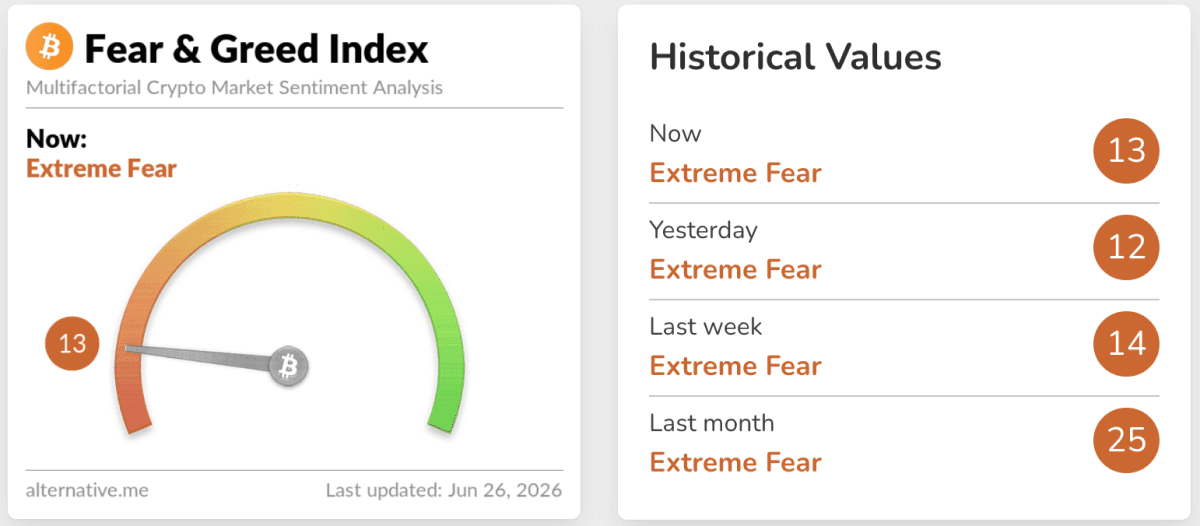
Crypto markets remained under heavy pressure this week as Bitcoin briefly fell below $59,000 and spot ETF outflows deepened across both Bitcoin and Ethereum funds. The Crypto Fear & Greed Index stood at 13 on June 26, still in “Extreme Fear,” compared with 12 yesterday, 14 last week, and 25 last month. The weakness reflected a broad risk-off move across major tokens, while stablecoins continued to gain relative share as a defensive part of the market. Against that backdrop, Metal DAO opened new governance proposals to evaluate MGUSD, FIDD and SOFID as potential future additions to the Metal Dollar basket, giving MTL holders a direct vote on how XMD evolves as more regulated onchain dollars come to market.
Bank of England Softens Stablecoin Rules
The Bank of England released its final policy framework for sterling-backed stablecoins this week, easing several earlier proposals after industry feedback. The central bank dropped planned individual holding caps and instead set a £40 billion total issuance limit per stablecoin, while also allowing up to 70% of reserves to be held in short-term government debt. The move gives the UK a clearer path for regulated payment stablecoins, although some industry groups still argued the framework remains conservative compared with the US and EU. For payments companies and banks, the update matters because it shows stablecoin regulation is becoming more practical, but still tightly focused on reserve quality, systemic risk, and consumer protection.
Metal DAO Weighs New Stablecoins for XMD Basket

Two new Metal DAO governance proposals are live to evaluate MGUSD, FIDD and SOFID as potential future additions to the Metal Dollar basket. The proposals do not automatically approve or integrate the assets, but they signal the start of a review process around technical, liquidity and compliance requirements. The timing is notable as more financial institutions move toward onchain dollars, creating a risk that stablecoin liquidity becomes fragmented across many issuers, chains and venues. Metal Dollar is designed as a shared basket for regulated digital dollars, with XMD aiming to connect approved stablecoins into one liquidity layer for payments, DeFi, settlement and real-world financial use cases. MTL holders can review the proposals and vote directly through Metal DAO governance using their WebAuth Wallet.
Solana Leads as Treasury Stocks Rally
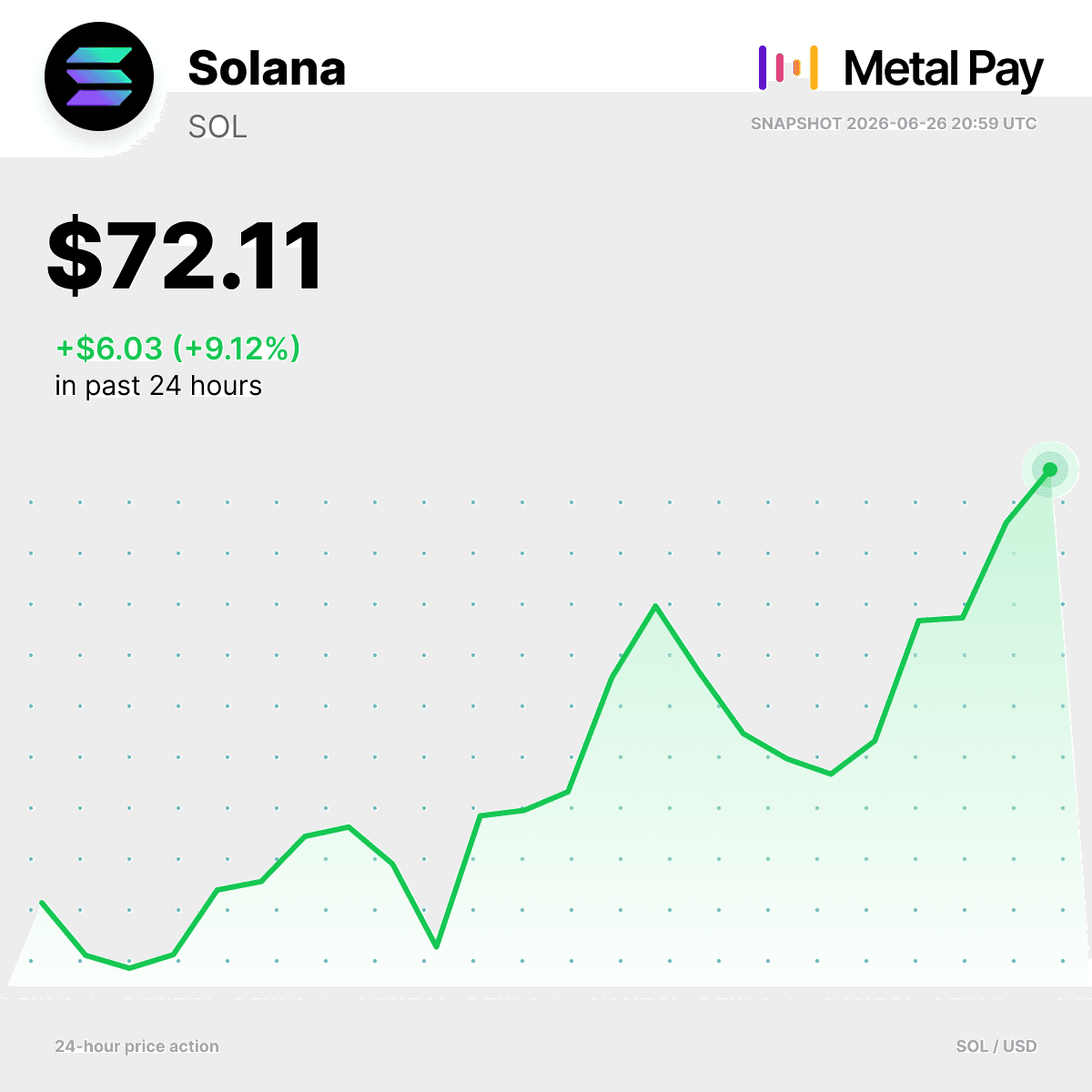
Solana was the standout large-cap token on Metal Pay this week, gaining 5.5% over seven days while most major crypto assets finished lower. The move came as Solana-focused digital asset treasury stocks also rallied, with The Block reporting that Sol Strategies jumped as much as 22% on Friday while SOL gained about 9% intraday. The rally showed that parts of the market are still willing to reward specific ecosystem narratives, even as broader crypto sentiment remains weak. For users watching token momentum, Solana’s relative strength stood out because it was the only tracked asset in this week’s Metal Pay chart with a positive seven-day return.
Bitcoin Soft Fork Debate Puts Data Storage Back in Focus
A proposed Bitcoin soft fork known as BIP-110 is drawing fresh attention as the network debates whether Bitcoin should more aggressively limit arbitrary data stored in transactions. The draft proposal, authored by Dathon Ohm and listed as a consensus soft fork, would temporarily restrict certain data fields for one year, with supporters arguing it would reduce spam, protect node operators and refocus Bitcoin on monetary use. Critics, including Jameson Lopp, argue the proposal is too risky, could create compatibility issues for some wallets or scripts, and may increase the chance of a contentious chain split if pushed without broad support. The debate matters because it cuts to one of Bitcoin’s oldest tensions: whether block space should be governed mainly by fees, or whether consensus rules should actively discourage non-payment use cases like inscriptions, tokens and large data payloads.
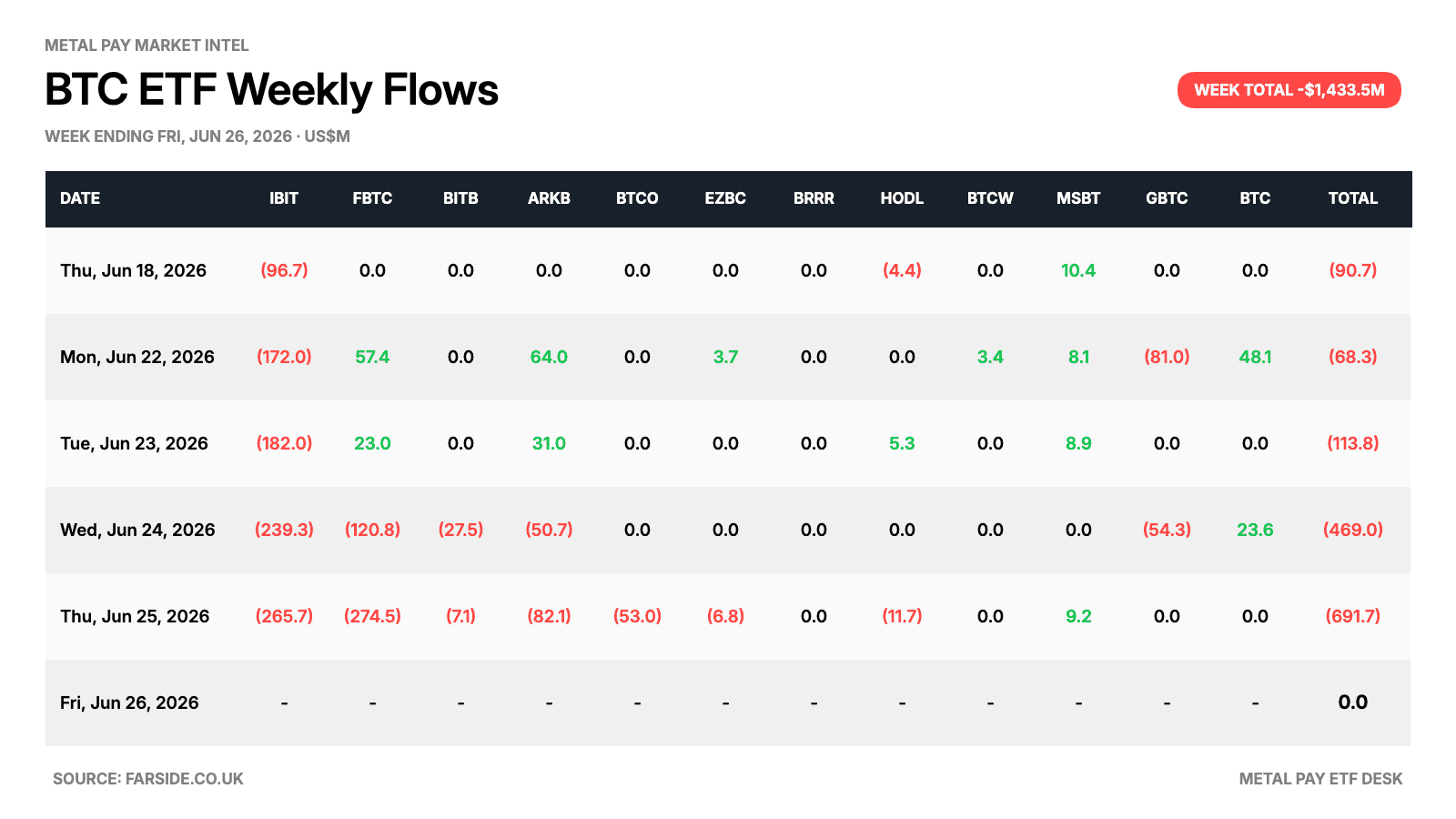
Monday opened with $68.3M in net outflows, led by a $172.0M withdrawal from IBIT and an $81.0M outflow from GBTC, partly offset by inflows into ARKB, FBTC and BTC. Tuesday stayed negative with $113.8M in net outflows as another $182.0M left IBIT, while FBTC and ARKB posted smaller inflows. The weakest midweek session came on Thursday, when Bitcoin ETFs saw $691.7M in net outflows, led by FBTC at $274.5M, IBIT at $265.7M and ARKB at $82.1M. Overall, Bitcoin ETFs finished the tracked week with $1.43B in net outflows, showing continued institutional selling pressure despite a few pockets of issuer-level inflows.
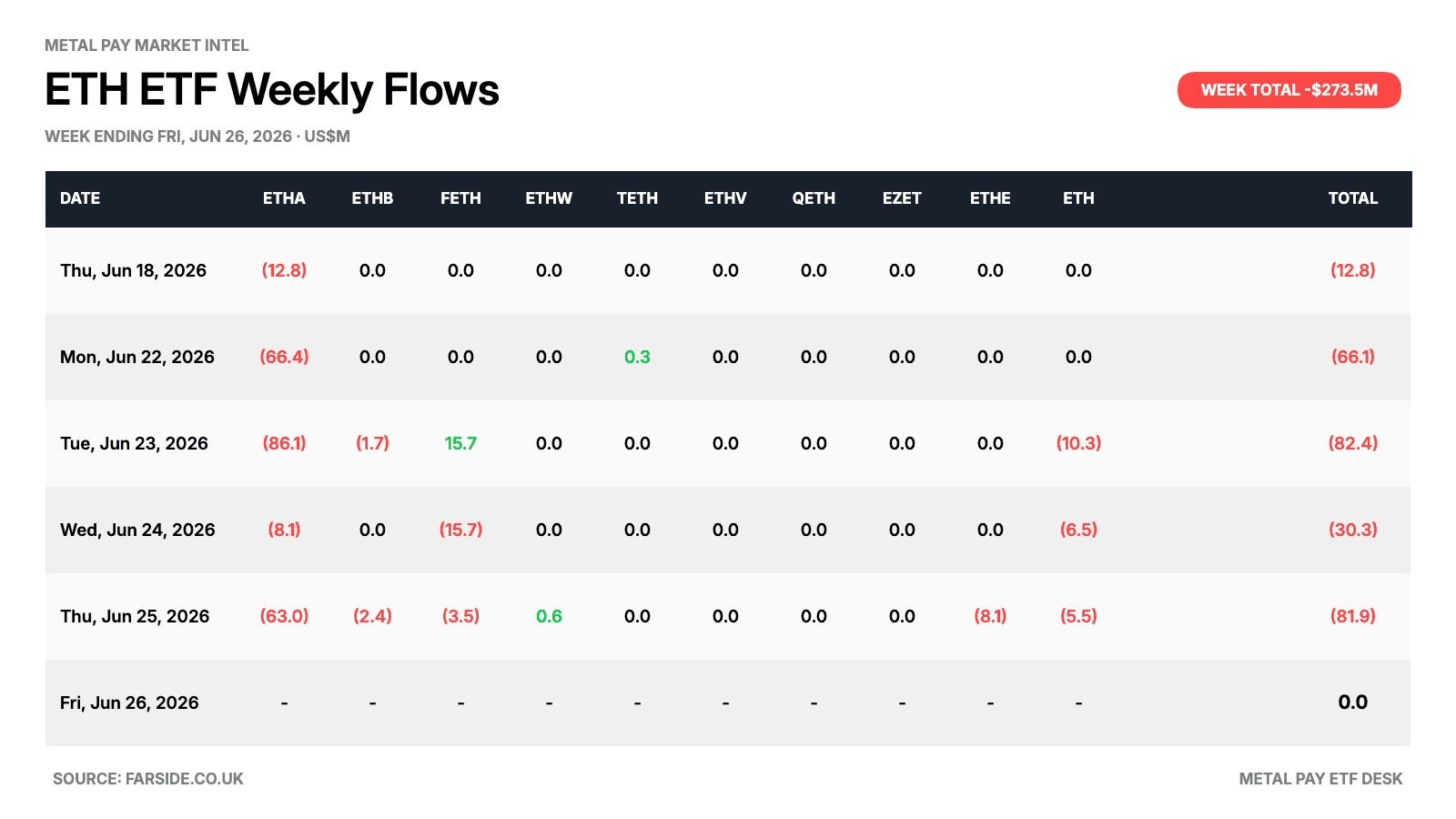
Monday started with $66.1M in net outflows, driven almost entirely by a $66.4M withdrawal from ETHA, with only a small $0.3M inflow into TETH. Tuesday deepened the reversal with $82.4M in net outflows as ETHA lost $86.1M and ETH saw $10.3M leave, partly offset by a $15.7M inflow into FETH. The strongest midweek outflow came on Thursday, when Ethereum ETFs posted $81.9M in net withdrawals, led by ETHA at $63.0M alongside smaller outflows from ETHE, ETHB, FETH and ETH. Overall, Ethereum ETFs ended the tracked week with $273.5M in net outflows, keeping pressure on the asset as ETH lagged most large-cap peers.
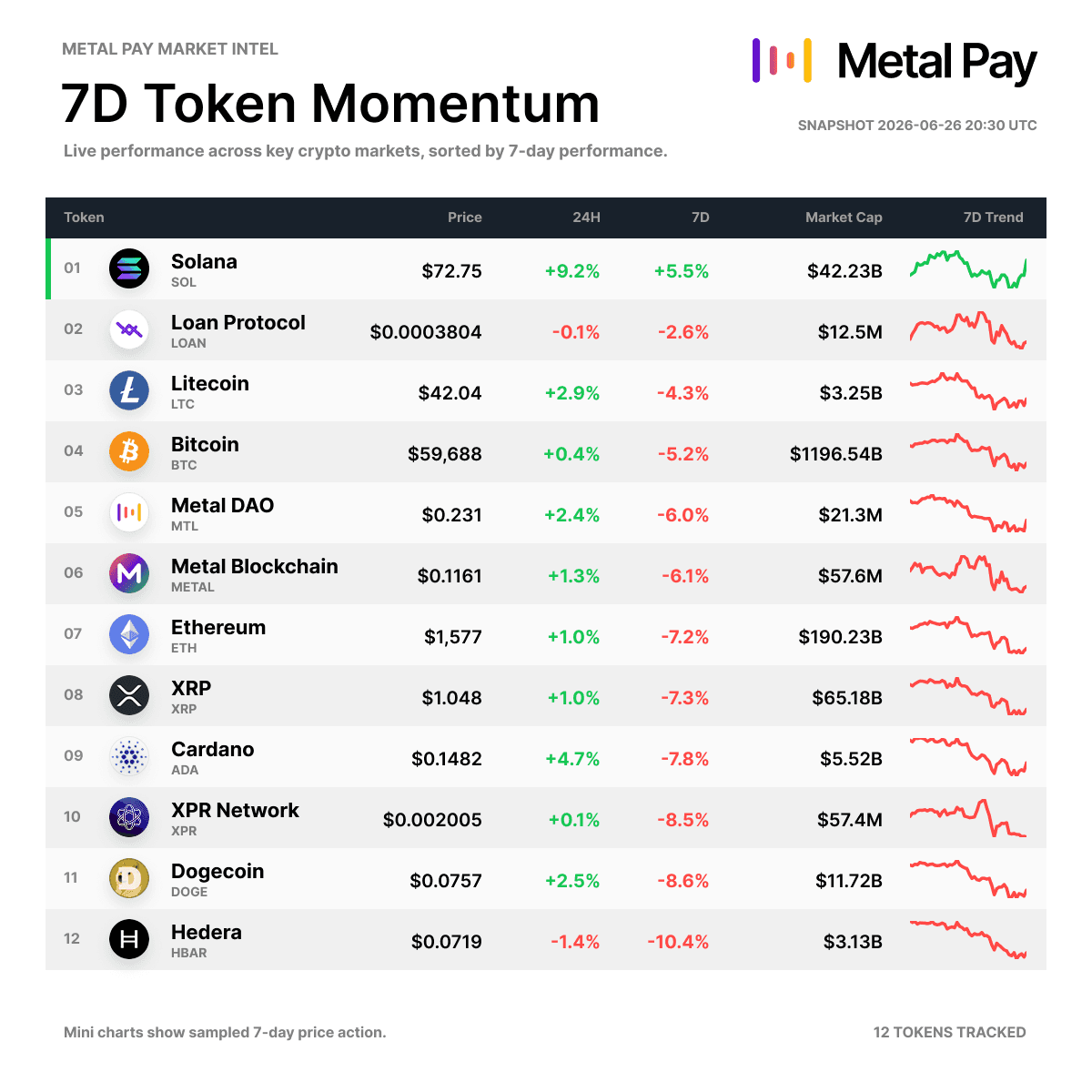
Solana was the clear weekly leader, rising 5.5% while every other tracked token finished in negative territory. Loan Protocol held up best among the decliners at -2.6%, followed by Litecoin at -4.3% and Bitcoin at -5.2%, while Ethereum, XRP, Cardano, XPR Network, Dogecoin and Hedera saw steeper weekly losses. The chart reflects a defensive market where relative strength mattered more than broad gains, with Solana standing out as the only tracked asset to post a positive seven-day return.