
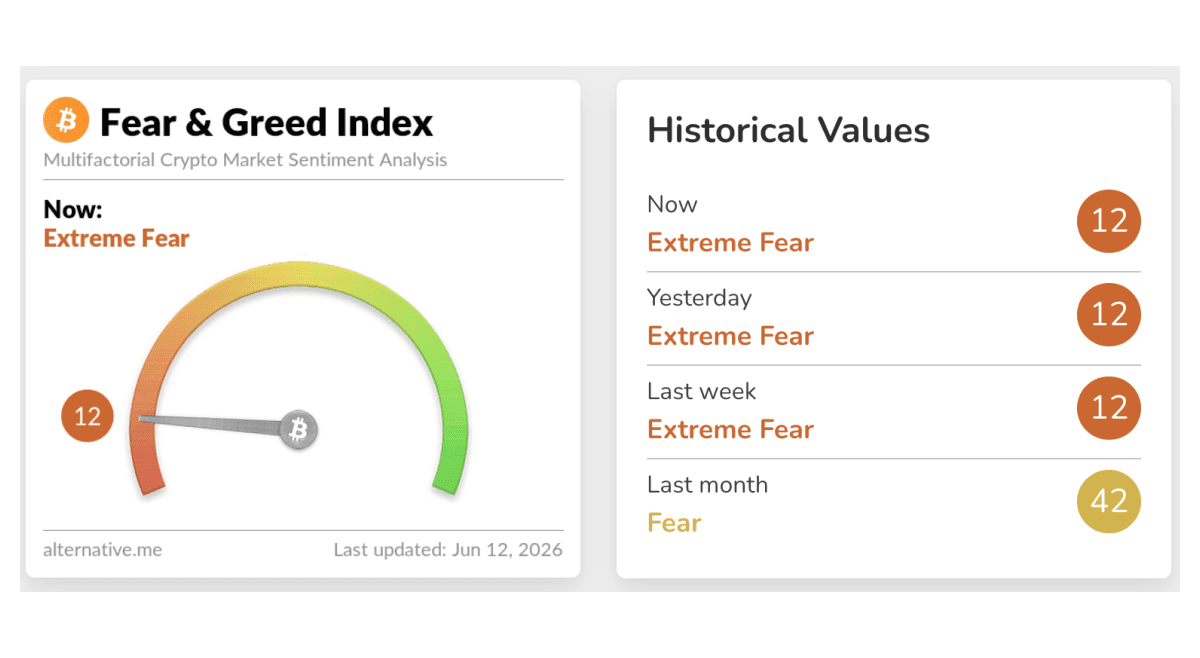
Crypto markets ended the week with sentiment still deeply defensive. The Fear & Greed Index stood at 12 on June 12, unchanged from yesterday and last week, while last month’s reading was 42, showing how sharply confidence has faded. Bitcoin ETF assets also fell back to levels last seen shortly after the 2024 U.S. election, according to CoinDesk, as outflows pressured the institutional side of the market. The split screen was sharp: crypto sentiment remained pinned in extreme fear while SpaceX’s record IPO pushed the company toward a near-$2 trillion valuation and pulled tokenized stock products into the spotlight.
SpaceX IPO Puts Tokenized Stock Access in Focus
SpaceX made its Nasdaq debut this week under the ticker SPCX after pricing its record-breaking IPO at $135 per share and raising $75 billion, according to Reuters. The listing valued SpaceX at about $1.77 trillion at pricing and drew major attention from both institutional and retail investors. For crypto markets, the launch also became a test case for tokenized equity access, with exchanges promoting pre-IPO and tokenized stock products around the event. Bybit later said its SpaceX IPO subscription would receive no allocations because xStocks was unable to deliver the underlying assets, with users set to receive full refunds. The episode shows both the demand for tokenized real-world assets and the execution risks that still come with linking crypto platforms to traditional securities markets.
Prediction Markets Face New Rulemaking Push
Prediction markets remained in focus this week as U.S. regulators and platforms moved to address fast-growing activity in event contracts. The CFTC has been advancing a framework for markets tied to real-world outcomes, while Kalshi and Polymarket continue to draw attention as trading expands across politics, economics and other event categories. Rising concern around insider-trading risks and market surveillance as prediction markets move closer to mainstream finance. For digital asset users, the key takeaway is that event contracts are becoming an important market-structure battleground, sitting between derivatives, gambling law and crypto-native trading behavior.
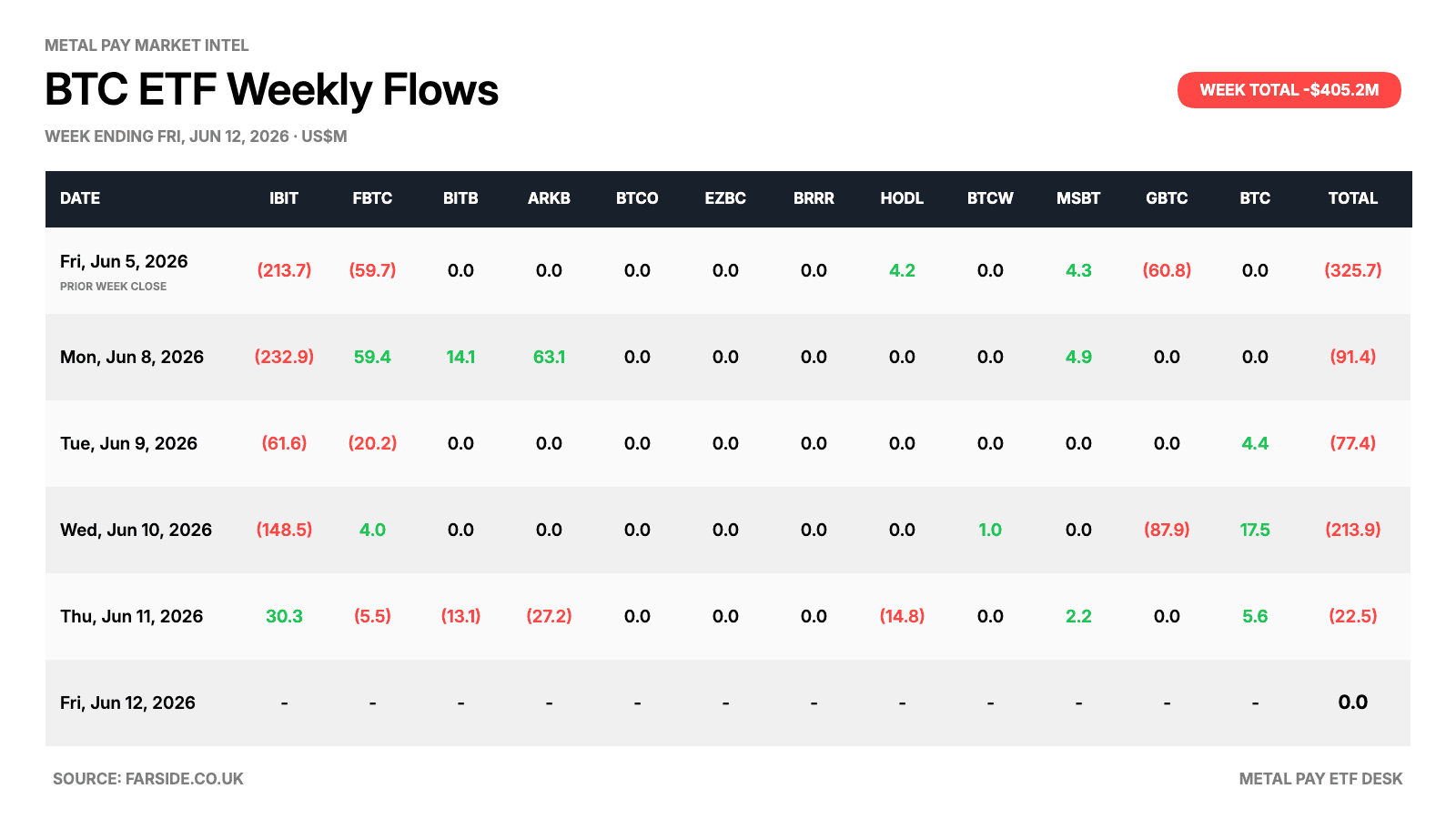
Monday opened with $91.4M in net outflows, led by a $232.9M drawdown from IBIT, while ARKB and FBTC partly offset the weakness with $63.1M and $59.4M in inflows. Tuesday stayed negative at $77.4M in outflows, with IBIT and FBTC again driving most of the pressure while BTC added a small $4.4M inflow. The weakest midweek session came Wednesday, when total outflows reached $213.9M as IBIT lost $148.5M and GBTC lost $87.9M, partly offset by BTC, FBTC and BTCW. Thursday improved but remained negative at $22.5M in outflows, despite IBIT returning to a $30.3M inflow. Overall, Bitcoin ETFs finished the tracked week with $405.2M in net outflows, showing continued pressure across the largest products.
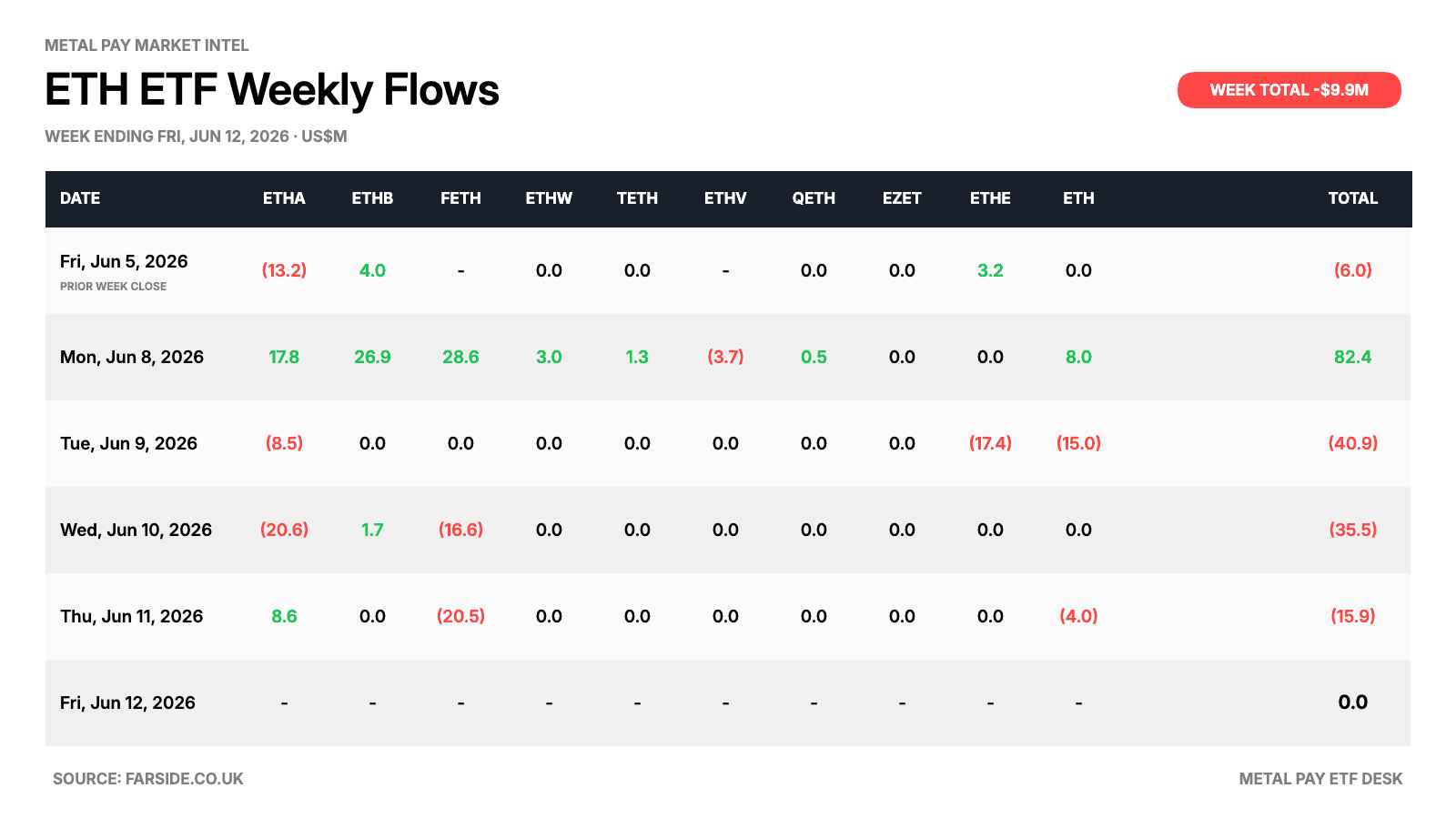
Monday opened with $82.4M in net inflows, led by FETH at $28.6M, ETHB at $26.9M and ETHA at $17.8M, with smaller support from ETH, ETHW, TETH and QETH. Tuesday reversed to $40.9M in outflows, driven by ETHE at $17.4M, ETH at $15.0M and ETHA at $8.5M. The weakest midweek session came Wednesday, when total outflows reached $35.5M as ETHA lost $20.6M and FETH lost $16.6M, partly offset by a small ETHB inflow. Thursday remained negative at $15.9M in outflows, with FETH and ETH weighing on the total while ETHA added $8.6M. Overall, Ethereum ETFs finished the tracked week with a modest $9.9M in net outflows after Monday’s strong inflow was largely erased.
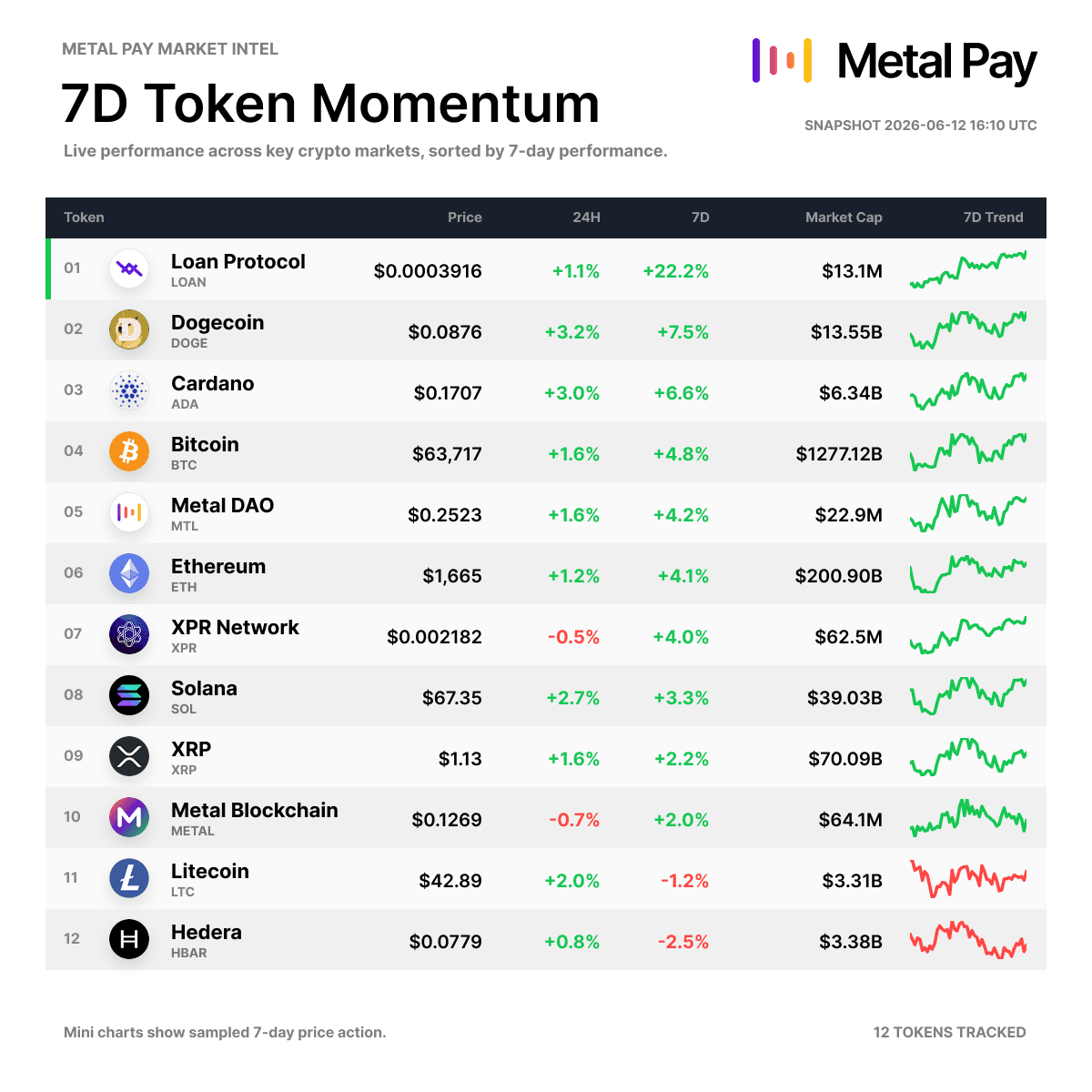
Loan Protocol was the strongest performer on the Metal Pay 7-day chart, rising 22.2% and clearly outpacing the rest of the tracked list. Dogecoin and Cardano also held up well, gaining 7.5% and 6.6%, while Bitcoin, Metal DAO, Ethereum and XPR Network posted mid-single-digit advances after last week’s sharp selloff. The move looks more like a broad relief bounce than a single-token catalyst, with high-beta assets recovering as Bitcoin stabilized near the low-$60,000 range.